Blogs

All Success Stories Wedding Tips Relationship Advice Horoscope Compatibility

Who Should Pay The Bill During First Meet?

Blog

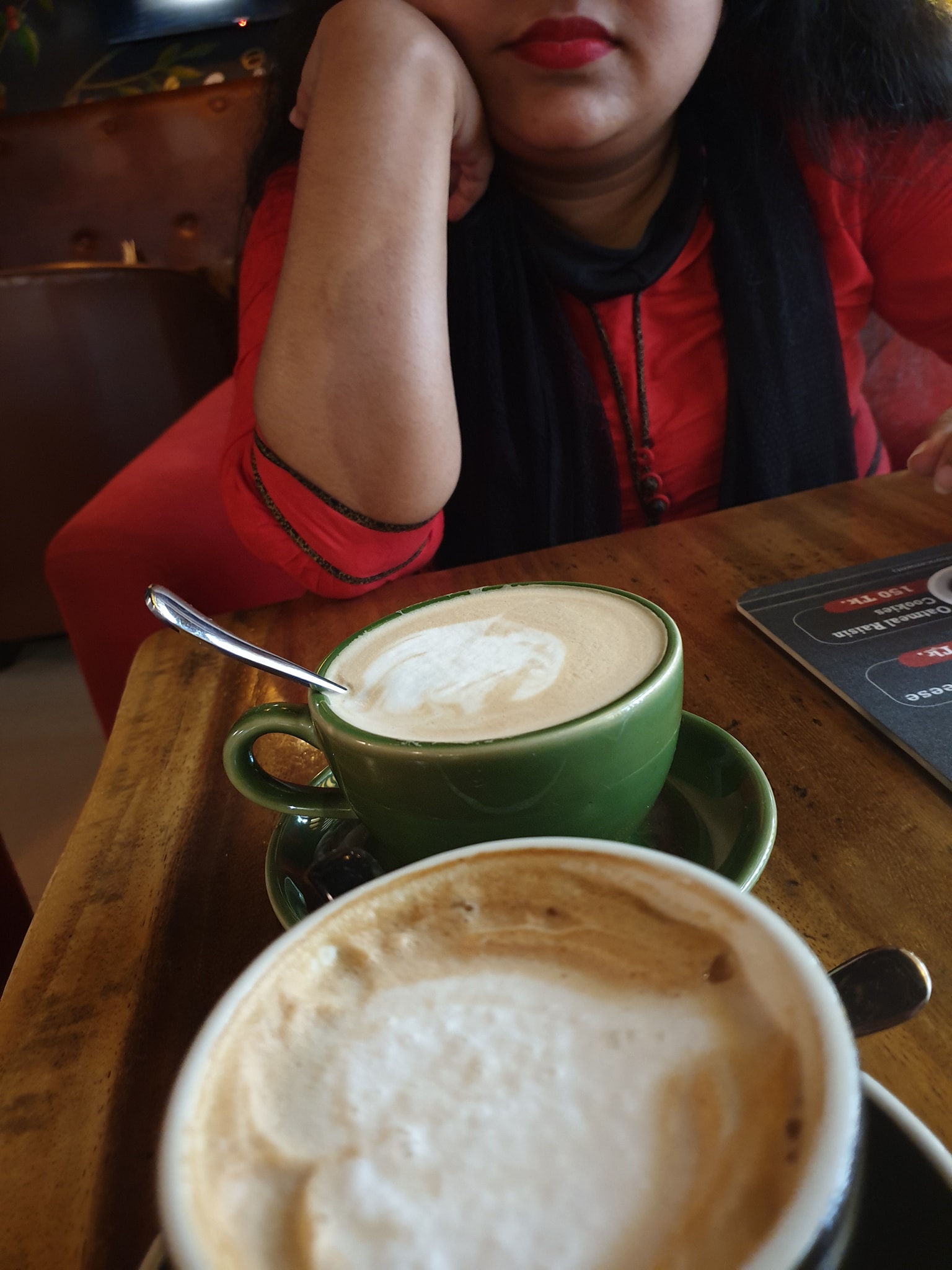
Who should pay the bill during the first meet is an age-old debate. Even in this era of feminism and women being financially independent, most women would still rather prefer the men pay during the first meet. It does not make the woman any less independent but rather demonstrates the man to be a gentleman. Apart from being chivalrous and courteous, taking control exudes confidence and gives the woman a sense of security; because no matter how independent women are, they love being taken care of, pampered and appreciated.
When we are talking about first meet ups, men instinctively think it has to be something extravagant. When in reality, it does not take up much to make any women happy. Most women are simply impressed by a bouquet of flowers or even by the man remembering how she likes her coffee. Similarly, in case of first meet ups, the man can simply take the woman to a place where the man’s wallet does not end up feeling lighter. After-all, women are supposed to be impressed by the company they are with and not by the place they are at.
Read Full Story →

SAA & MTMAS

When you keep sabr and pray continuously, Allah sends you miracles. My marriage is a fairytale and a miracle from Allah. My husband lives in our same road and we have a distance of five minutes only but all these years I had no idea that my soulmate lives so close to me. My husband is the most amazing, kindest, soft spoken human I ever saw! Shara apu from Bolo kobul, she is a blessing to me. Allah sent her as a bridge for our marriage. Lots of dua for Bolo Kobul and may Allah give you a long prosperous life Shara apu. Keep us in your prayers.
Read Full Story →

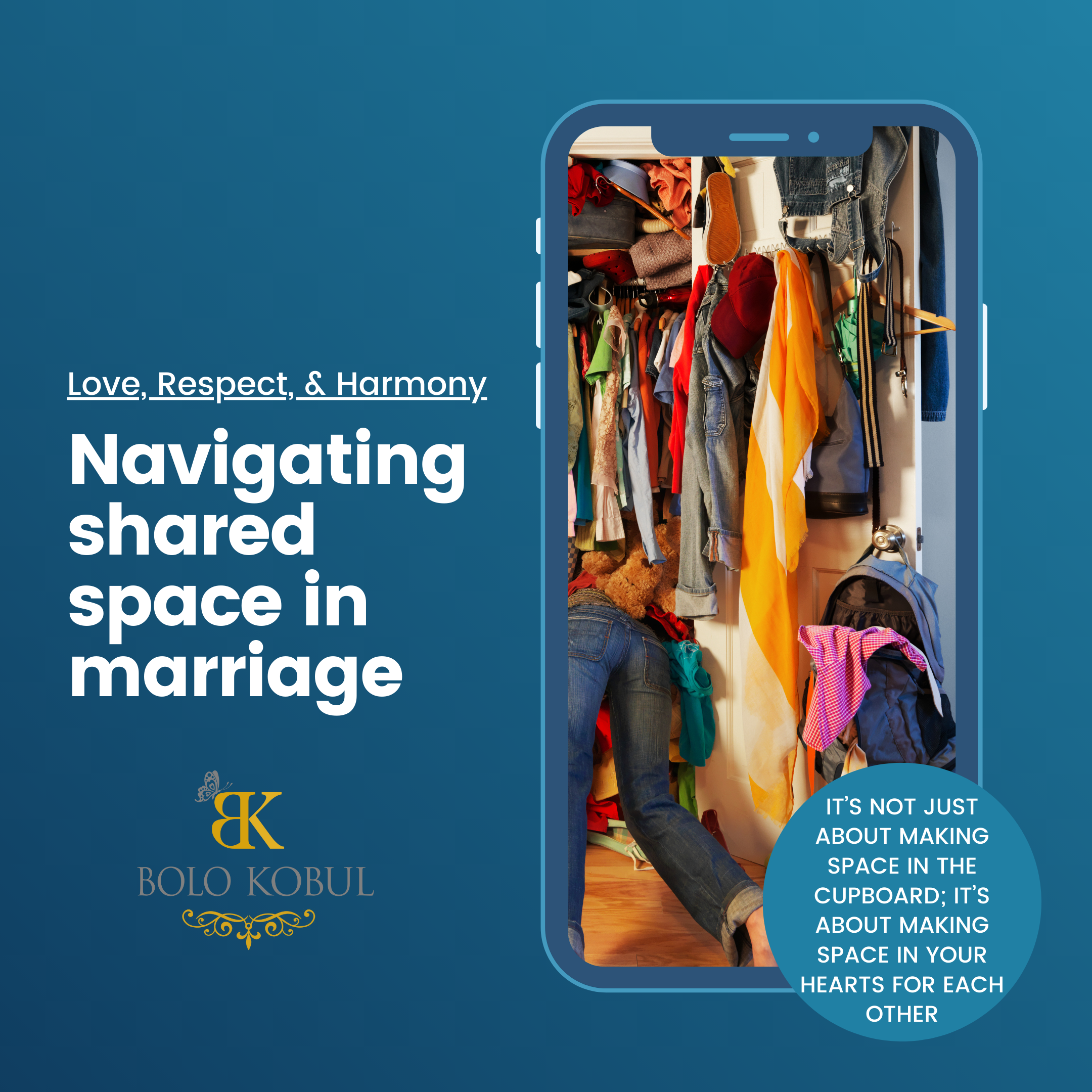
Space in the Cupboard: The Unseen Battle of Marriage

Blog
Marriage - The beautiful journey of two souls becoming one. But amidst the love, laughter, and endless cups of cha, there lies a silent battlefield: the cupboard. Whether you're setting up home in Dhaka or settling in Dallas, the struggle for space in the cupboard is real. Let’s dive into this amusing yet critical aspect of marital harmony.

The Initial Arrangement
In the beginning, everything seems perfect. You’ve moved in together, and there’s that fresh sense of newness. The cupboard is neatly divided – his clothes on one side, hers on the other. But, much like Dhaka traffic during rush hour, chaos is inevitable.

The Space Invaders
Ladies, we know you love your saris, salwar kameez, and those gorgeous lehengas for special occasions. Gents, your punjabis, shirts, and office wear are just as important. But soon, the neatly divided space starts to blur. "Honey, can I just put this one dress here?" And so it begins. Before you know it, his side looks like a cramped street vendor’s stall, while her side resembles a grand bazaar.

The Negotiation
The key to a peaceful cupboard is negotiation. Just like bargaining at New Market, it requires skill and patience. "I’ll give you space for two more shirts if I can keep my extra pairs of shoes here." Or, "Let’s install another shelf; it’s a win-win." Compromise is the cornerstone of both a successful marriage and an organized cupboard.

Creative Solutions
Living in Bangladesh or abroad, space can be a constraint. Here are a few creative solutions:
Dual-Purpose Furniture: Invest in a bed with storage drawers or an ottoman that doubles as a storage unit.
Vertical Space: Use hanging organizers and shelves to maximize vertical space.
Seasonal Rotation: Store off-season clothes in suitcases or under the bed to free up space.

The Purge
Every few months, it’s essential to purge the cupboard. Donate clothes you haven’t worn in a year. This not only creates space but also brings a sense of relief. Plus, it’s a good deed! "One person’s clutter is another person’s treasure."

In the grand scheme of marriage, the battle for cupboard space is a minor skirmish. It teaches patience, compromise, and creativity. So, whether you’re folding clothes in Barisal or Boston, remember that sharing a cupboard is just one of the many adventures in this journey of togetherness.

A well-organized cupboard might be a dream, but a happy marriage is a reality you can achieve with love, respect, and a bit of humor. After all, it’s not just about making space in the cupboard; it’s about making space in your hearts for each other.
Read Full Story →

Matchmaking in the Times of Online Dating Apps

Blog
In the bustling corridors of university life, where dreams flourished and hearts danced to the rhythm of youth, I found myself enchanted by a senior who had ignited a spark within my heart. Little did I know that this enchantment would mark the beginning of a beautiful journey, one where I would become my very own matchmaker.

The object of my affection was a senior, a charismatic individual who seemed to possess an aura of mystery and allure. As I secretly admired from afar, I knew that my feelings needed a voice, a way to bridge the gap between my heart and his. So, I turned to the age-old art of poetry, crafting verses that bared my soul and unveiled the emotions I had kept hidden for so long.

In those carefully chosen words, I poured my heart out, leaving the poem as a message to be deciphered. It was a gamble, a leap of faith into the unknown. But as fate would have it, my feelings were reciprocated, and our love story began to unfold.

Four magical years flew by, filled with laughter, shared dreams, and a bond that only grew stronger with each passing day. We supported each other through the highs and lows of life, navigating the challenges of university life and adulthood together. Our love became an unbreakable bond, and we knew that we were meant to be.

A decade has now passed since we have tied the knot, and our love story continues to evolve. We are not just a couple; we are a family of four, with two beautiful children who embody the love that brought us together. Our journey has been a testament to the power of love, perseverance, and the belief that sometimes, the heart knows best.

But our story is not just about us; it's about the ripple effect that love can create. Inspired by our own journey, I embarked on a mission to help others find their soulmates in a world where technology had changed the rules of dating. In an era dominated by swipes and screens, I am trying to become a beacon of hope, proving that love could still be found in the digital age.

With unwavering determination, I delved into the intricacies of modern matchmaking, using technology as a tool to connect hearts and create lasting relationships. My journey as a matchmaker was fueled by the belief that everyone deserves a chance at true love, and I was determined to be the catalyst for that change.

As I reflect on my journey, I am proud to say that I have successfully supported 83 prospects in finding their life partners. Each success story is a testament to the enduring power of love and the resilience of the human heart.

In a world where love stories are often reduced to swipes and superficial connections, our story stands as a reminder that true love is worth the wait, the effort, and the risk. And I, the matchmaker, will continue to bring people together, one heartfelt connection at a time, proving that love can conquer all, even in the times of online dating apps.
Read Full Story →

Why Be Scared of Arranged Marriage? Busting the Myths and Embracing the Journey

Blog
Arranged marriages often evoke a mixture of apprehension and curiosity. While the concept might seem daunting, especially for those unfamiliar with it, there are numerous reasons why one shouldn't be scared of arranged marriage. Let’s explore the common fears and why they might be unfounded for those living in Bangladesh or abroad.

The Fear of the Unknown
Myth: "I don't know the person well enough. What if we’re not compatible?"
Reality: In arranged marriages today, families and individuals invest time in getting to know potential partners. There are meetings, conversations, and even dating-like experiences to ensure compatibility. It's like a well-organized job interview, but with more tea and samosas.
Instance: Think of it as a social media profile—it's not just the picture; it’s about reading the bio, interests, and mutual friends.

The Pressure to Conform
Myth: "I have no choice in the matter. My parents are forcing me."
Reality: Modern arranged marriages are a collaborative effort. Parents might suggest potential matches, but the final decision rests with the couple. It’s more of a guided introduction rather than a forced arrangement.
Instance: It’s like your parents being your personal matchmakers, minus the swipe left and right. They’ve just upgraded from Facebook to real-life matchmaking!

The Cultural Stereotypes
Myth: "Arranged marriages are outdated and regressive."
Reality: Arranged marriages have evolved with time. They now blend tradition with modern values, focusing on mutual respect, shared goals, and personal growth. It’s about preserving cultural heritage while embracing contemporary practices.
Instance: Imagine combining the best of both worlds—traditional values with modern swag. It’s like having biryani with a side of sushi.

The Fear of Missing Out (FOMO) on Love
Myth: "What if I don’t fall in love?"
Reality: Love in arranged marriages often blossoms over time. The initial connection, based on mutual respect and understanding, lays a strong foundation for love to grow. It’s not about the love-at-first-sight cliché but about building a deep, meaningful relationship.
Instance: Think of it as a slow-cooked curry—flavors deepen and get richer with time, unlike fast food which is just quick and forgettable.

The Concern About Family Dynamics
Myth: "I’ll be marrying the whole family, not just the person."
Reality: While family involvement is a significant aspect of arranged marriages, it can also be a source of support and strength. Understanding family dynamics and setting boundaries helps create a balanced relationship.
Instance: Yes, it’s a package deal, but think of all the extra hands for household chores and the endless supply of homemade goodies!

The Fear of Cultural and Personal Adjustments
Myth: "What if I can’t adjust to the new lifestyle or traditions?"
Reality: Adjustment is a part of any marriage, arranged or love. The key is open communication and willingness to understand and embrace each other’s backgrounds. This cultural exchange can enrich your life and broaden your horizons.
Instance: Adjustments are like trying a new cuisine—you might hesitate at first, but once you develop a taste, you’ll love the variety it brings.

The Myth of Compromise Over Happiness
Myth: "Arranged marriages require compromising personal happiness for familial obligations."
Reality: Healthy relationships involve compromise from both partners, leading to mutual happiness. In an arranged marriage, the support of families can enhance the couple’s happiness, providing a robust support system.
Instance: It’s like sharing your Netflix account—initially, you compromise on what to watch, but eventually, you find series that you both love binge-watching together.

Embracing Arranged Marriage Instead of fearing arranged marriages, view them as a different path to the same destination—a loving, fulfilling, and enduring partnership. The combination of family support, cultural richness, and modern practices makes arranged marriages a unique and viable way to find lifelong companionship.

In the end, it’s not about how you met, but how you build and nurture the relationship. So, whether you’re embarking on this journey in Bangladesh or anywhere else in the world, approach it with an open heart, a positive mindset, and a dash of humor. After all, every love story is unique, and yours will be no exception.
Read Full Story →
Can You Fall in Love in Arranged Marriage?

Blog
Can you fall in love in an arranged marriage, especially in the colorful tapestry of Bangladesh? Well, picture this: two souls brought together by the cosmic forces of aunties and uncles, their fate sealed over cups of tea and stacks of biodata.

In the land of vibrant saris and mouth-watering biryanis, arranged marriages are as common as monsoon rains. But can love blossom in this arranged garden of matrimony? Absolutely! It's like a slow-cooked curry – it takes time, spices, and a little bit of magic.

Imagine the sparks flying over negotiations about Denmohor and seating arrangements at the wedding. Who knew arguing about the guest list could lead to heart palpitations? But hey, with a little bit of patience, a sprinkle of humor, and a whole lot of family support, love in an arranged marriage might just surprise you!

Sure, it might start with polite nods and awkward smiles, but soon you find yourself stealing glances over plates of delicious pithas at family gatherings. Before you know it, you're finishing each other's proverbs and sharing secrets about your favorite hilsa recipes.

So, can you fall in love in an arranged marriage in Bangladesh? Absolutely! It's like discovering the perfect blend of spices in your grandmother's recipe – unexpected, delightful, and absolutely heartwarming. After all, love knows no boundaries, not even those set by a carefully curated list of potential partners.
Read Full Story →

No Need to Panic: Arranged Marriages Are Not What You Think

Blog
When the topic of arranged marriage comes up, some people might instantly feel a chill down their spine, imagining awkward conversations, forced smiles, and a lifetime of "What ifs?" But before you break into a sweat, let’s take a step back and ask—why be scared of arranged marriage?

First off, arranged marriage is not about being pushed into a relationship with a complete stranger. It's more like having your own personal team of matchmakers (aka your family) who have your best interests at heart. They’re not just picking anyone off the street; they’re carefully vetting, investigating, and comparing notes, all to find someone who checks your boxes—sometimes even the ones you didn’t know you had.

Think of it this way: while dating apps might match you with someone based on a quick swipe, an arranged marriage setup is like having a highly personalized algorithm, except this one includes your mom’s sixth sense and your dad’s knowledge of the extended family tree. Plus, in the age of platforms like Bolo Kobul, you get the best of both worlds—tradition and technology. You can connect with your potential partner, chat, and decide at your own pace, all with the safety net of cultural compatibility and family support.

And let’s not forget, arranged marriages often come with an entire entourage of advice, support, and the occasional pep talk from well-meaning relatives. Sure, it can be overwhelming, but it’s also a process grounded in community, values, and, ultimately, love.

So, why be scared? Embrace it. After all, in an arranged marriage, you’re not walking into the unknown alone—you’re stepping into a journey backed by generations of wisdom, with a little help from modern-day matchmaking magic.
Read Full Story →

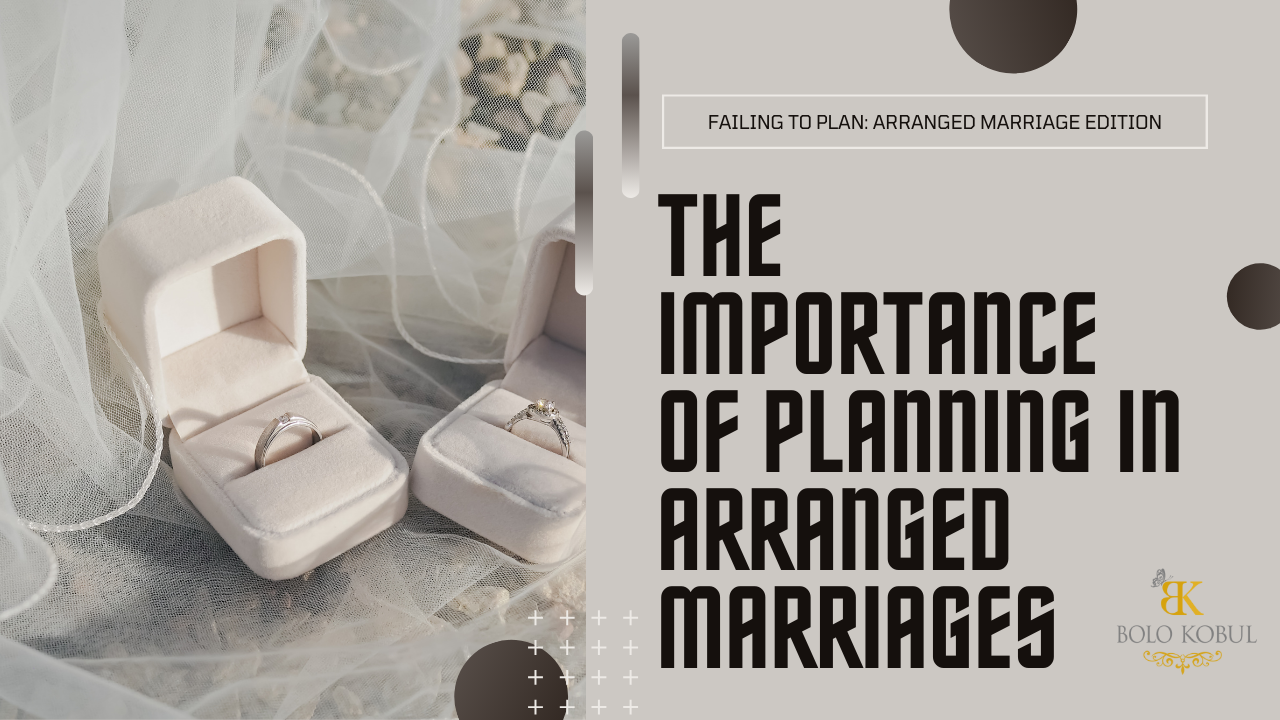
Failing to Plan Means Planning to Fail: The Arranged Marriage Edition

Blog
In the land of biryani, bustling bazaars, and beautiful weddings, one thing stands out: the age-old tradition of arranged marriages. Whether you're in the heart of Dhaka or residing in Dubai, the concept remains vibrant and relevant. But here's the kicker: failing to plan means you're planning to fail. Let's explore this idea with a sprinkle of wit and a dash of Bangladeshi charm.

The Prelude: The Proposal
Arranged marriages in Bangladesh often start with a well-coordinated dance of proposals. Families meet, exchange pleasantries, and of course, evaluate the prospects. But without proper planning, this initial stage can turn into a comedy of errors.

Scenario 1: The Mismatched Meeting
Imagine the groom's family showing up an hour early, while the bride's family is still scrambling to get the samosas ready. The groom's side is sitting awkwardly in the drawing-room, and someone shouts from the kitchen, "O ma, guest ashseee!" (Oh my, the guests have arrived!).

The Vetting Process
Proper planning involves thorough vetting of the prospective match. Background checks, horoscope matching (for the traditionalists), and ensuring compatibility in education and values are all essential.

Scenario 2: The Surprise Vegetarian
Picture this: a grand feast is laid out with mutton korma, chicken roast, and all the trimmings. The groom arrives and sheepishly admits, "Actually, I’m a vegetarian." The host family’s jaws drop, and the carefully planned menu turns into an unintended comedy.

The Financial Planning
Weddings can be expensive affairs. From the bridal trousseau to the venue, everything needs meticulous budgeting.

Scenario 3: The Budget Blowout
Without a solid financial plan, expenses can skyrocket. Suddenly, you find yourself negotiating with the decorator, "Is there a discount if we use fewer flowers?" Or worse, the wedding budget runs dry just as you're about to book the honeymoon tickets.

The Emotional Preparedness
In arranged marriages, emotional preparation is key. Both parties need to communicate and understand each other's expectations and aspirations.

Scenario 4: The Silent Couple
On the wedding night, instead of the joyous conversations expected, there’s an awkward silence. The couple realizes they haven't discussed anything beyond the wedding details. Planning those pre-marital conversations is crucial to avoid such awkward moments.

The Cultural Sensitivity
For Bangladeshis living abroad, incorporating cultural traditions into the wedding can be both a nostalgic and a logistical challenge.

Scenario 5: The Missing Mishti
Imagine planning a wedding in London and realizing last minute that there’s no decent mishti (sweets) available. A frantic search ensues, with someone finally suggesting, "Maybe we can fly them in from Dhaka?" Planning ahead can save you from such sugary crises.

The Humor in Planning
Even with the best-laid plans, things can go awry. But that's where the magic lies—in the unplanned, spontaneous moments that bring laughter and lasting memories.

Scenario 6: The Dance Floor Disaster
Despite planning everything down to the last detail, the DJ plays the wrong song for the first dance. The groom tries to save face by doing an impromptu dance, and the bride joins in, creating a hilarious, memorable moment that everyone talks about for years.

Planning is the backbone of a successful arranged marriage. From the initial meetings to the grand celebration, every step requires careful thought and preparation. But beyond the meticulous planning, it’s the ability to handle the unexpected with grace and humor that truly makes the journey special.

So, whether you’re organizing a wedding in Sylhet or Seattle, remember: failing to plan means you’re planning to fail. But also, don't forget to leave a little room for spontaneity and laughter—because those unplanned moments often turn out to be the most cherished memories.
Read Full Story →

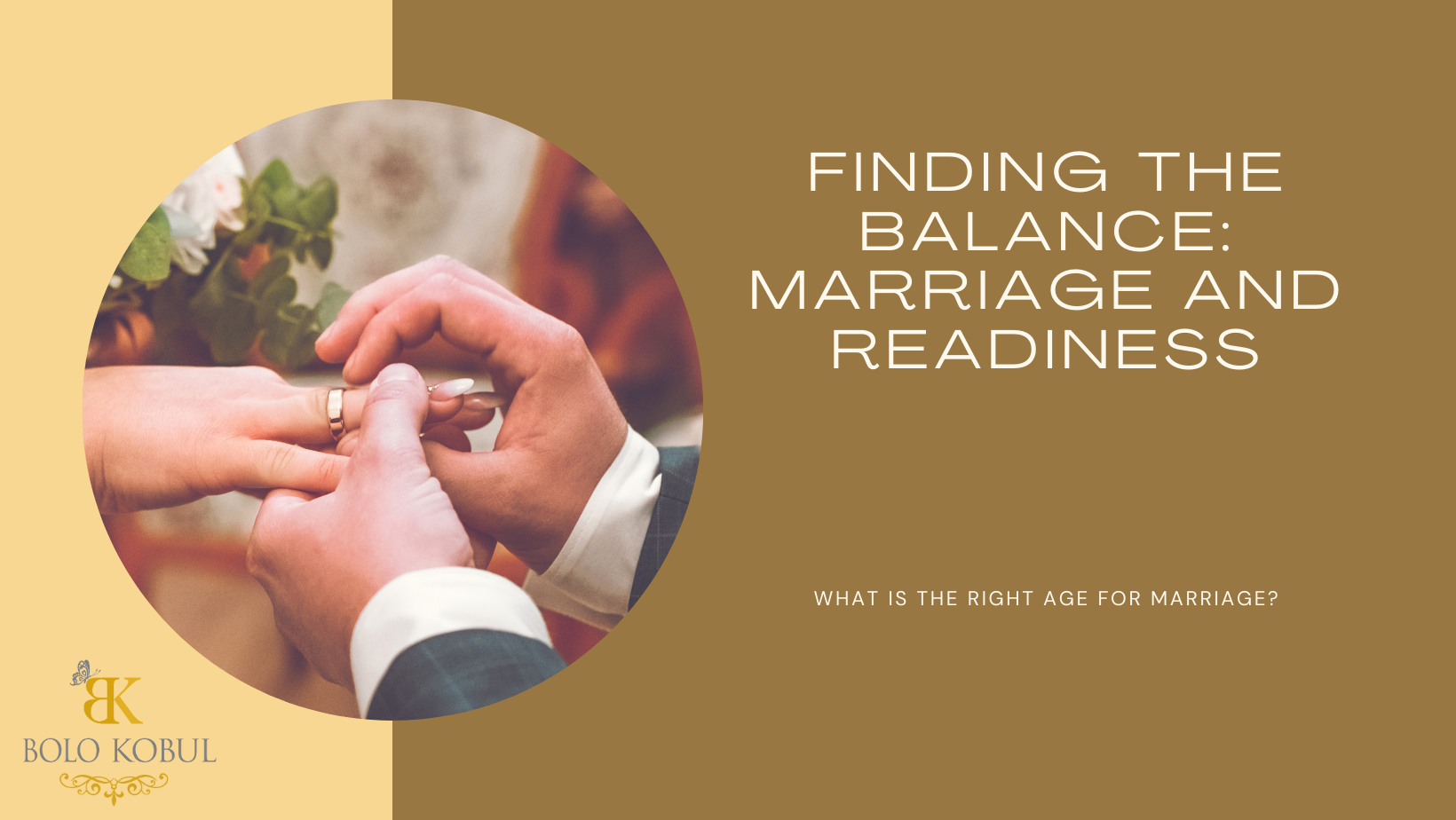
The Right Age for Marriage: Balancing Tradition and Personal Readiness

Blog
Deciding on the right age to get married is a topic that often sparks lively debates, especially in a culturally rich and diverse society like Bangladesh. The "right" age can vary greatly depending on individual circumstances, societal expectations, and personal preferences.

Cultural and Familial Expectations
In many Bangladeshi families, there's often an expectation to marry at a certain age. For women, this might be in their early to mid-20s, and for men, it might be in their mid to late 20s. These expectations are rooted in traditions and the idea of starting a family while still young. However, it's essential to balance these expectations with personal readiness. You might get nudged by your aunties at every family gathering, saying, “You’re not getting any younger!” But remember, they're also the ones who believe ginger tea can cure anything.

Educational and Career Goals
Modern couples, especially in urban areas, are increasingly prioritizing education and career stability before tying the knot. Achieving certain educational or career milestones can provide financial stability and personal fulfillment, which are crucial for a healthy marriage. As you climb the corporate ladder or finish that PhD, you might hear, “Aren’t you going to settle down yet?” Just remind them, “I’m settling down… with my books and a paycheck!”

Emotional and Psychological Readiness
Marriage requires a significant level of emotional maturity and psychological readiness. Understanding oneself, developing emotional intelligence, and being ready to share your life with someone else are crucial factors.

Financial Stability
Being financially stable can alleviate many potential stressors in a marriage. Having a steady income, savings, and financial planning in place before getting married can provide a solid foundation for your new life together. You don’t need to have a mansion in Gulshan or Dhanmondi, but having more than just lint in your pockets is a good start.

Societal Changes and Trends
With changing societal norms, the age of marriage is also shifting. More people are choosing to marry later, prioritizing personal growth and experiences before settling down. In today’s world, it’s perfectly fine if your “engagement” is with your job or travels for a few extra years before it’s with a person.

There isn’t a one-size-fits-all answer to the right age for getting married. It’s about finding a balance between cultural expectations, personal readiness, and life goals. Whether you choose to marry young or wait until you’re more established, the key is to ensure that both you and your partner are ready for the commitment. So, whether you're 25 and ready to dive into marital bliss or 35 and still exploring life, remember, it’s not about when you get married, but how ready and willing you are to make it work. After all, a well-timed marriage, much like a well-cooked biryani, is worth the wait!
Read Full Story →

Kabin-nama: An Islamic marriage contract

Blog
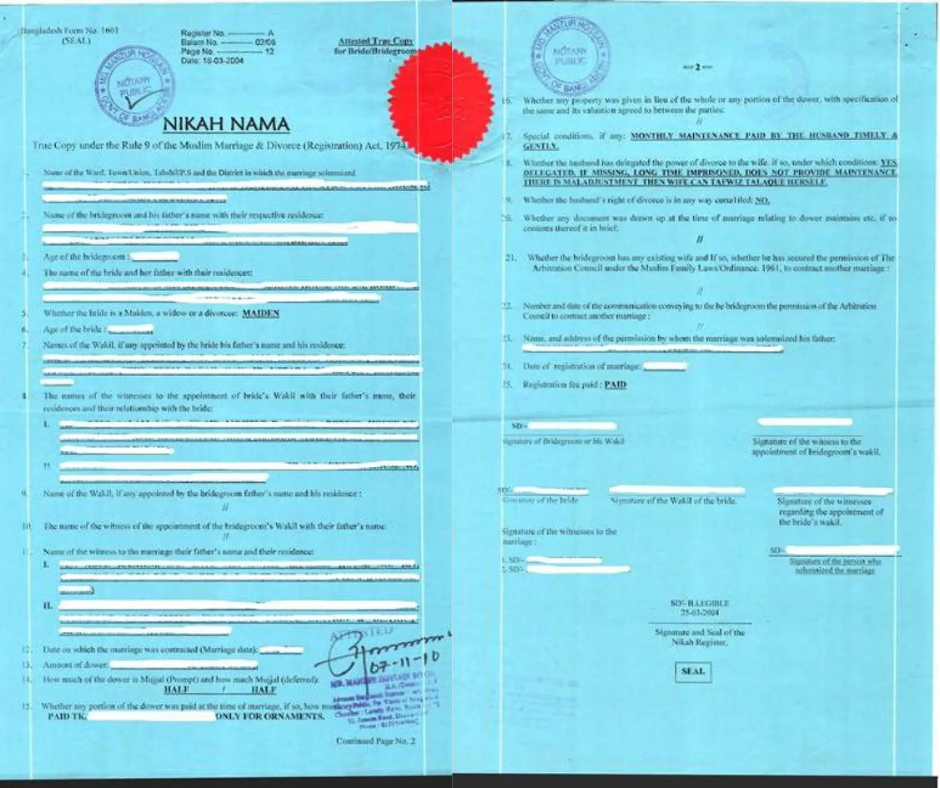
Kabin or "Kabin-nama", also known as nikahnama, is a marriage contract in Muslim law. It is a written crucial legal and religious agreement between the bride and groom, and it outlines the terms and conditions of the marriage. The kabin must be signed by both parties in the presence of two witnesses.

The following are some of the details that are typically included in a Bangladeshi Muslim wedding kabin:
• The names of the bride and groom, their parents, and their witnesses
• The date and place of the wedding
• The amount of mahr (dower) that the groom will pay the bride
• The bride's right to inherit from the groom
• The groom's obligation to provide for the bride's financial needs
• The bride's right to seek a divorce if the groom fails to meet his obligations

In addition to these basic details, the kabin may also include other provisions, such as:
• The bride's right to work outside the home
• The bride's right to custody of the children in the event of a divorce
• The distribution of property in the event of a divorce
The kabin is a legally binding document, and it can be used to protect the rights of both the bride and groom in the event of a separation or divorce.

The kabin is typically written in Bengali, but it may also be written in Arabic or English. The kabin is usually signed by the bride and groom in the presence of their parents and two witnesses, and is then registered with the government. The kabin is a public document, and it can be obtained by either the bride or groom if needed.

The kabin is an important part of a Bangladeshi Muslim wedding, and it is important for both the bride and groom to understand the terms and conditions of the contract before signing it:
• To understand the terms of the marriage contract
• To ensure that their needs are met
• To build trust and communication
• To have a sense of ownership over their marriage
It can help to prevent misunderstandings and conflict down the road. It can help to strengthen the relationship between the bride and groom. Moreover, it can help to ensure that the marriage is conducted in a fair and just manner.
Read Full Story →
2 4 5